
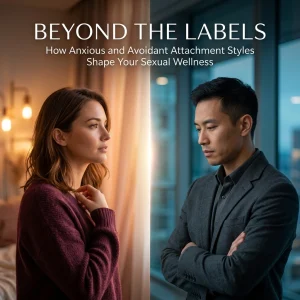
We often talk about “chemistry” as if it’s some mysterious lightning bolt that either hits or doesn’t. We look for it in the first few dates, and we mourn it when it fades. But beneath the surface of that spark, and beneath the frustration of its absence, lies a blueprint we’ve been carrying since we were very small.
This blueprint is your attachment style. It’s the internal map that tells you whether the world is a safe place, whether people can be trusted, and how much of yourself you’re allowed to show. While we usually discuss attachment in terms of how we argue or how we text, it has a massive, often silent impact on our sexual wellness.
Understanding your attachment style isn’t about putting yourself in a box or finding a “reason” why you’re “broken.” In fact, there is no such thing as broken, just different ways our hearts and bodies have learned to survive. When we peel back the labels of “anxious” and “avoidant,” we find a path to more honest, fulfilling intimacy.
The Blueprint: Why Attachment Matters in the Bedroom
Attachment theory suggests that the way our early caregivers responded to our needs created a “working model” for our adult relationships. If your needs were met consistently, you likely developed a Secure attachment. You feel comfortable with intimacy and aren’t overly worried about rejection.
However, many of us develop Insecure attachment styles. These aren’t defects; they are creative adaptations to our early environments.
- Anxious Attachment: You might have experienced inconsistent care. As a result, you became highly tuned to the needs and moods of others to ensure you wouldn’t be abandoned.
- Avoidant Attachment: You might have experienced a lack of emotional response or felt “smothered.” You learned that the only person you can truly rely on is yourself, so you keep people at arm’s length to protect your independence.
When these styles enter the bedroom, they don’t just affect how we feel; they affect how our bodies respond, how we communicate our desires, and how we experience pleasure.

The Anxious Heart: Sex as a Quest for Safety
For those with an anxious attachment style, sex is rarely “just sex.” It is often a primary way to seek reassurance, validation, and proximity. If you identify with this style, you might find that your sexual desire is incredibly high, not necessarily because you’re “hormonal,” but because sex feels like the ultimate proof that your partner still wants you.
The “Yes” That Means “Please Stay”
One of the most common challenges for anxious attachment is the tendency to prioritize a partner’s satisfaction over your own. You might find yourself performing or agreeing to things you aren’t actually into, simply because you fear that saying “no” will lead to a loss of connection. This is often called “compliance” in research, and while it might keep the peace in the moment, it can lead to a long-term disconnect from your own sexual wellness.
The Paradox of Satisfaction
Interestingly, expert research shows that anxiously attached individuals often report high levels of sexual satisfaction and arousal. Why? Because the high-stakes nature of the encounter: the need for connection: can actually intensify the physical experience. However, this satisfaction is often fragile. If a partner seems distant afterward, or if the “afterglow” isn’t long enough, that satisfaction can quickly turn back into a spiral of worry.
The Avoidant Shield: Sex as a Solo Flight
If you lean toward an avoidant attachment style, your sexual blueprint is often built around maintaining autonomy. Intimacy can feel like a threat to your sense of self. To protect your independence, you might “deactivate” your emotions during sex.
The “Ick” and Emotional Distancing
Have you ever felt a sudden wave of “the icks” or a desire to leave immediately after a sexual encounter? That is often the avoidant attachment system kicking in. When physical closeness becomes too intense, your brain signals that you are “trapped,” causing you to withdraw emotionally or even physically.
The Role of Fantasy and Technology
Avoidant individuals often find it easier to experience sexual wellness when there is a buffer. This might mean relying more heavily on pornography, masturbation, or sexual fantasies rather than shared intimacy with a partner. These tools allow for sexual release without the perceived “demand” of another person’s emotional needs. While there is no shame in these activities, they can sometimes become a wall that prevents genuine connection with a partner.
The Anxious-Avoidant Trap in Intimacy
In relationships, we often see the “Anxious-Avoidant Trap.” This is a cycle where the anxious partner moves closer to seek reassurance, which causes the avoidant partner to feel overwhelmed and pull away. This, in turn, makes the anxious partner even more worried, causing them to pursue even harder.
In the bedroom, this looks like:
- The Pursuit: The anxious partner initiates sex to feel “okay” in the relationship.
- The Retreat: The avoidant partner feels pressured and “shuts down” or experiences a drop in libido.
- The Conflict: Both partners end up feeling rejected, lonely, and misunderstood.
Breaking this cycle starts with recognizing that these behaviors aren’t “personal” attacks. They are nervous system responses. You can explore more about these dynamics in our blog or listen to discussions on the podcast.
The Physical Reality: Arousal and the Nervous System
Our attachment styles don’t just live in our thoughts; they live in our nervous systems. When we feel insecure, our bodies enter a “fight, flight, or freeze” state.
- Anxious arousal can sometimes feel like “high octane” energy, but it can also lead to difficulty reaching orgasm if the mind is too busy scanning the partner for signs of boredom or rejection.
- Avoidant deactivation can lead to physical challenges like low lubrication, erectile difficulties, or a general feeling of being “numb” or “disconnected” from the neck down.
Sexual wellness requires a “rest and digest” state: the Parasympathetic Nervous System. When we don’t feel securely attached, our bodies have a hard time entering that state of relaxation required for deep pleasure.

Toward Earned Security: Healing Your Sexual Wellness
The good news is that attachment styles are not a life sentence. We can develop what is called “Earned Security.” This happens when we become aware of our patterns and consciously work to create new, healthier ones.
Here are some practical, gentle ways to start:
1. The 30-Second Body Scan
Before or during intimacy, take a moment to check in. If you are anxious, ask: “Am I doing this for me or for them?” If you are avoidant, ask: “Am I present in my body right now, or am I somewhere else?” Simply noticing where you are can help bring you back to the moment.
2. Communicate the “Why,” Not Just the “What”
Instead of just saying “I’m not in the mood” (which can trigger an anxious partner), try: “I really want to feel close to you, but my body feels a bit overwhelmed right now. Can we just cuddle instead?”
For the anxious partner, instead of “Do you still find me attractive?” try: “I’m feeling a little insecure today, and a bit of extra affection would really help me feel connected.”
3. Focus on “Slow” Intimacy
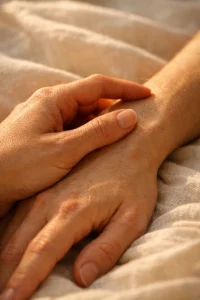
Sometimes, the goal of “great sex” is too much pressure. Try spending time together where the goal isn’t orgasm, but rather sensation. This could be a long massage, holding hands, or even just sitting back-to-back. This helps the avoidant partner feel less “trapped” and the anxious partner feel more “seen.”
4. Practice “Self-Soothed” Intimacy
Learning to regulate your own emotions is a superpower. If you feel the urge to pull away or the urge to cling, take three deep breaths. Remind yourself: “I am safe. I am allowed to have boundaries. I am allowed to be loved.”

A Journey of Compassion
Healing your sexual wellness is a marathon, not a sprint. It’s about replacing shame with curiosity. Instead of asking “What is wrong with me?” try asking “What is my body trying to tell me?”
Whether you lean toward the anxious or avoidant side of the spectrum, your needs are valid. You deserve a sexual life that feels safe, expansive, and authentically yours. There is a deep resilience in the human heart, and by understanding your attachment blueprint, you are already halfway toward a more secure, joyful connection.
For more resources on navigating these complex emotional landscapes, feel free to browse our groups and workshops or check out our other educational content. The path to wellness is never one you have to walk alone.